Finding good workers just gets harder and harder
The UK logistics sector has been wrestling with labour shortages for several years, and warehouses have felt the impact more than most. Recruitment is tougher, wage bills are rising, and competition for reliable staff continues to intensify. The national living wage has now largely caught-up with many warehouse roles, making it harder to ‘just throw money’ at the problem.
While there is no single fix for the issue, well-designed warehouse layouts combined with the right, elected automation can significantly reduce the pressure on headcount and create a more resilient operation.
Understanding the Labour Shortage in UK Warehousing
A range of factors contribute to the current staffing challenge. The post-Brexit shift in labour availability, an ageing workforce, changes in job expectations, greater economic inactivity in the workforce, the impact of the National living wage and competition from other industries have all squeezed the pool of potential warehouse recruits.
For operators, this means that relying purely on recruitment is no longer a sustainable strategy. Instead, many are focusing on efficiency — doing more with the staff they already have, and designing warehouses that support productivity rather than hinder it.
Why Warehouse Layout Matters More Than Ever
A poorly designed warehouse layout creates hidden costs every single day. Long walking distances, congested aisles, inefficient pick routes, and awkward product placement all slow down work and exhaust staff. When labour is scarce, these inefficiencies become even more noticeable.
Good layout design addresses these issues head on. By positioning fast-moving lines close to packing areas, zoning products sensibly, and planning aisles for smooth traffic flow, warehouses can reduce unnecessary movement and increase pick rates without adding staff. A better layout also improves morale, as work feels more manageable and less physically draining.
Ultimately, a well-designed warehouse reduces reliance on large teams by making each individual’s time count.
The Role of Automation: Support, Not Replacement
Automation often raises concerns about job displacement, but in reality, it tends to complement the existing workforce rather than replace it. When introduced carefully, automation removes the most repetitive, heavy or time-consuming tasks, allowing staff to focus on higher-value activities.
Common examples include:
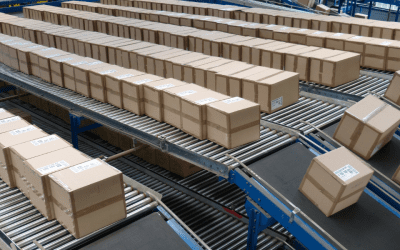
- Conveyors and sortation systems that reduce manual handling and speed up product flow.
- Pick-to-light and voice-directed systems that simplify tasks and cut training time for new starters.
- Autonomous Mobile Robots (AMRs) that transport goods around the warehouse, dramatically reducing walking time.
These technologies help manage peak periods with fewer people and improve the consistency of output. With staffing shortages unlikely to disappear, such tools are becoming essential rather than optional.
Design and Automation Work Best Together
Automation performs at its best when supported by thoughtful warehouse design. Installing robots or conveyors in a disorganised or cramped layout often creates more problems than it solves. Conversely, when workflows are redesigned first — shortening travel distances, rethinking storage strategies and aligning equipment with operational rhythms — automation delivers stronger returns.
Many UK warehouses are adopting modular, scalable automation solutions rather than investing in large, single-system projects. This approach allows them to adapt to changing demand without committing to oversized, inflexible infrastructure. It also reduces risk, as improvements can be implemented gradually and evaluated step-by-step.
Ergonomics: A Simple but Powerful Lever
Ergonomics is sometimes overlooked, but its impact on productivity and staff retention is substantial. Simple adjustments — such as height-adjustable packing benches, clearer signage, better lighting, and positioning heavy items at waist level — can reduce physical strain and injury risk.
In an environment where recruitment is difficult, keeping experienced staff healthy and engaged is invaluable. Ergonomic improvements are often inexpensive yet deliver immediate benefits, making them one of the most accessible ways to improve warehouse efficiency without increasing headcount.
Training, Systems, and Workforce Engagement
Technology alone does not solve labour shortages. Effective training ensures staff feel confident using new tools and systems, which in turn speeds up adoption. Integrating devices such as handheld scanners, voice systems or AMRs with a strong Warehouse Management System creates smoother workflows and clearer visibility of demand.
There is also a cultural aspect to consider. Warehousing often carries an outdated perception as low-skill work. When businesses modernise their environments, introduce new technology, and provide clear training and career development opportunities, they make themselves more attractive employers. This shift helps reduce turnover — an increasingly important factor when hiring is difficult.
A Balanced, Practical Approach
The key to managing labour shortages is not to automate everything at once, nor to rely solely on hiring more staff. The most effective strategy is a balanced combination of:
- well-planned warehouse layouts
- targeted automation
- ergonomic improvements
- investment in people and processes
Some warehouses will gain the most from re-zoning and workflow redesign; others will benefit from AMRs or enhanced picking systems. The right approach depends on the operation, but the principle is the same: identify the true bottlenecks before investing, start small, and scale up as results appear.
Labour shortages are a reality, but not an insurmountable problem.
Labour shortages are a reality for UK warehouses, but they need not define performance. With a thoughtful blend of design, automation and people-focused improvements, operators can significantly reduce staffing pressure and build a more efficient, resilient operation.
Good layout design cuts waste, automation supports staff where it matters most, and ergonomic improvements keep teams healthy and productive. Together, they enable warehouses to work smarter, not harder, even when labour is in short supply.